Key Takeaway
An assistant that answers only from your approved, current SOPs and cites the document and revision gives operators the right answer at the machine, on any shift.
A second-shift operator is setting up a job they last ran four months ago. They need the torque spec for a fixture and the inspection frequency for a critical dimension. The work instruction exists. It’s in a document control system, or a shared drive, or a binder by the cell. It might be revision C or revision D.
So they walk over and ask the lead. The lead is in the middle of something, but answers from memory. Usually the memory is right.
Most plants run like this, and it works until it doesn’t. The lead retires. The question comes up on a shift where nobody knows the answer. Someone uses a superseded revision and a batch goes to MRB.
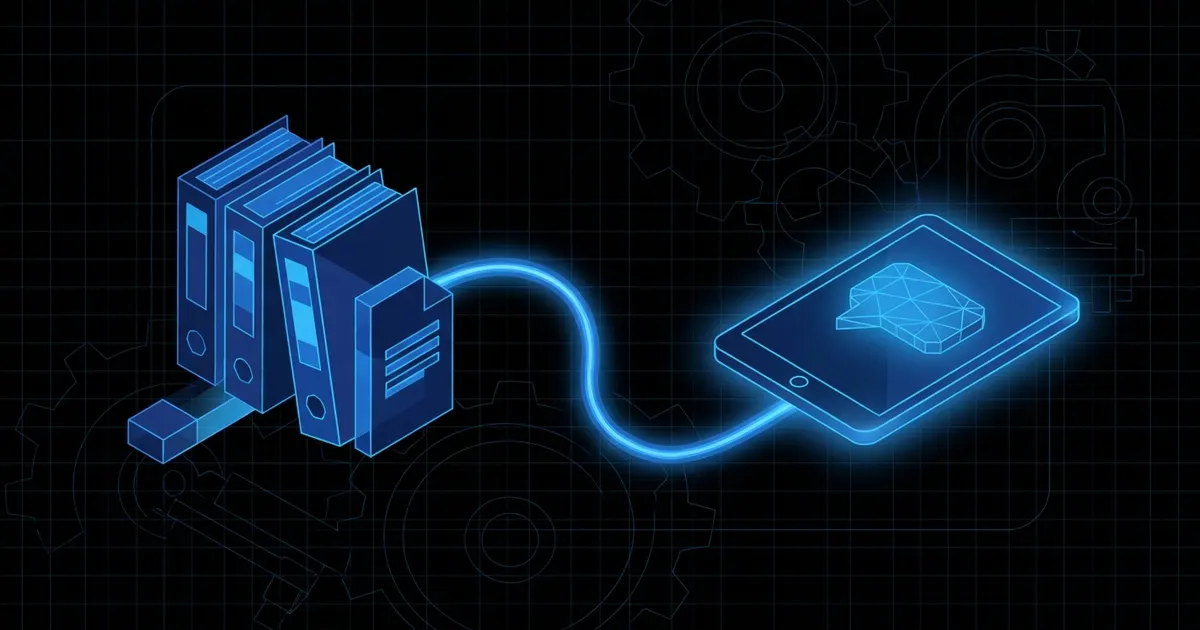
An AI assistant built on your own SOPs and work instructions gives operators the right answer at the machine, with the source document cited, on any shift.
Why documentation goes unused
Most manufacturers have invested heavily in documentation. ISO 9001, AS9100 or IATF 16949 audits require it. The problem is rarely that documents don’t exist. It’s that they’re slow to use.
Finding the right document takes too long. Work instructions are organized by part number, document number or department. An operator with a question about a symptom (“the part is coming out with chatter marks on the bore”) doesn’t know which document covers it.
Documents are long. A 40-page SOP might have the one paragraph an operator needs on page 27. Scrolling a PDF on a shop floor terminal with gloves on is not a realistic workflow.
Revisions multiply. Engineering change orders update documents, but printed copies and saved files don’t always follow. Operators learn to trust the person over the paper.
Generic chatbots make this worse, not better. A general-purpose AI model will answer a torque question confidently, using whatever it learned from the internet. On a shop floor, a plausible wrong answer is more dangerous than no answer.
What the assistant does
The assistant we build answers questions using only your approved documents. It shows where every answer came from.
Searches your documents in plain language
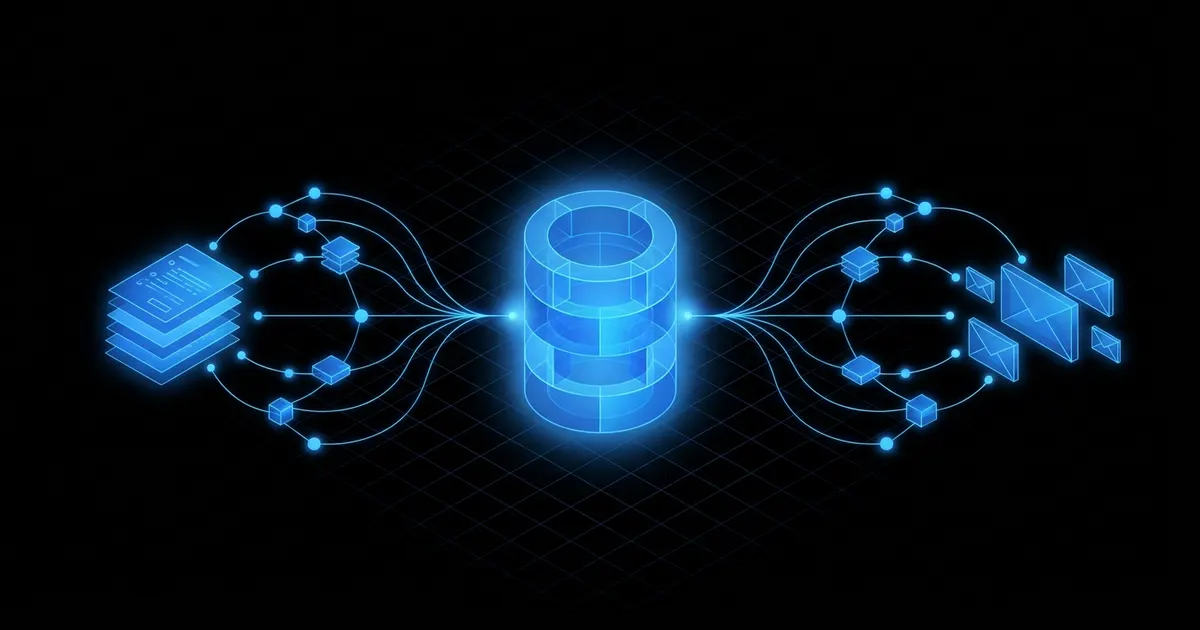
Operators ask questions the way they’d ask a coworker: “What’s the inspection frequency on op 30 for this part?” or “How do I clear a fault 214 on the press?” The assistant searches your SOPs, work instructions, setup sheets, maintenance procedures and quality documents to find the relevant sections.
Search works on meaning, not just keywords. A question about “chatter on the bore” finds the troubleshooting section about vibration and tool deflection even if the word “chatter” never appears.
Answers with citations
Every answer includes the document name, number, revision and section it came from, with a link to open the source. Operators can verify before acting. Supervisors can check that the assistant pointed to the right place.
If the documents don’t contain an answer, the assistant says so. It doesn’t fill the gap with a guess.
Works where operators already are
The assistant is available on the devices your floor already uses: shop floor terminals, tablets at the cell, or a chat tool like Microsoft Teams. Answers are short and readable on a small screen. Where it helps, the assistant can show the relevant image or diagram from the source document.
Respects your document control
The assistant only answers from documents that are approved and current. When an ECO releases a new revision, the old one drops out. If your document control system is the source of truth, the assistant connects to it directly so it stays in sync.
Where your team stays in control
Quality and engineering own the content. The assistant only reads what they approve.
You decide:
- Which document libraries and types are included
- Which roles can see which documents, such as limiting maintenance procedures to maintenance staff
- Whether answers on safety-critical topics include a required confirmation or a prompt to check with a lead
- Who reviews questions the assistant couldn’t answer
That last point turns out to be useful. A log of unanswered and frequently asked questions shows exactly where your documentation has gaps. Engineering gets a prioritized list of what to write or fix.
What it takes to build this properly
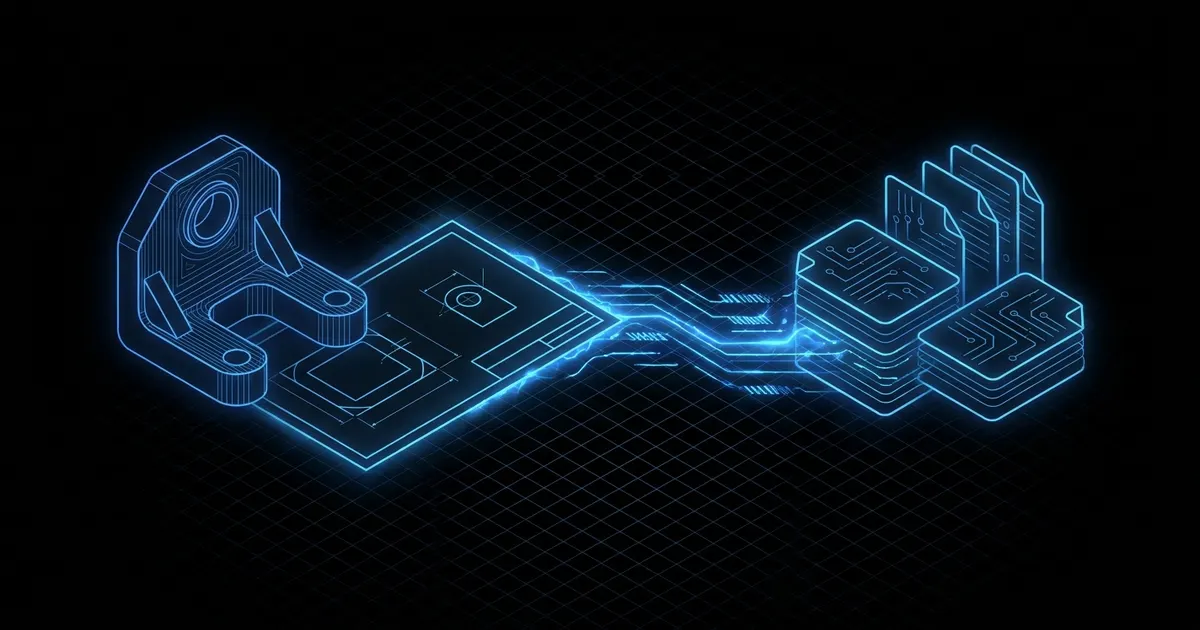
Document ingestion that handles real files. Your documents are Word files, PDFs, scanned PDFs, Excel setup sheets and images with callouts. Some have tables that matter, like torque specs or inspection plans. The build includes parsing these accurately, including tables and diagrams, not just plain text.
Retrieval that finds the right section. Getting the right paragraph out of thousands of documents is the hard part. We tune how documents are split and indexed for your content, then test it against real operator questions.
Revision awareness. The system has to know which revision is current and exclude superseded ones. That usually means connecting to your document control or QMS, whether it’s a dedicated system like MasterControl or ETQ, SharePoint, or a structured shared drive.
Evaluation before go-live. We build a test set of real questions from your floor, with correct answers checked by your team. The assistant has to answer those correctly and cite the right source before anyone relies on it.
Access control and hosting. Some documents are proprietary or customer-controlled. The assistant respects your permissions and runs in an environment you control.
Your part
You’ll need to provide:
- Your current SOPs, work instructions and related documents, in whatever format they exist today
- Access to your document control system, if you use one
- A list of common questions operators ask, or a few hours with a lead or supervisor to collect them
How the build works
You describe the problem. We scope it with you into a clear spec: which documents, which users, which devices, and what accuracy the assistant has to meet.
You get a fixed, outcome-based price. You pay for a working assistant, not for hours.
AI agents do the build, supervised by senior engineers who own the document pipeline, retrieval quality and security. You get a production-grade assistant deployed on your floor in days to weeks.
Frequently asked questions
What happens if the assistant gives a wrong answer?
Every answer cites its source, so operators and leads can check it. The assistant is tested against your own questions before launch, and answers outside the documents are refused rather than guessed.
Can it handle documents in more than one language?
Yes. Operators can ask in their preferred language and get answers drawn from your documents, with the original source cited.
Do our documents need to be cleaned up first?
No. The assistant works with what you have. It will also show you where documents conflict, are outdated or are missing, which helps your cleanup effort.
Can it connect to our MES or ERP for job-specific answers?
Yes, as an extension. With a connection to your MES or ERP, the assistant can show the right work instruction for the job currently running at that station.