Key Takeaway
An AI dispatch assistant that knows your capacity, driver hours and customer windows lays out ranked load and route options, and your dispatchers still make the call.
Your best dispatcher holds an enormous amount in their head. They know which driver runs out of hours in Columbus tomorrow afternoon. They know which customer’s dock closes at 2 p.m. and actually means it. They know which trailers have the right equipment and which driver needs to be home Friday. On a normal day, they turn all of that into a plan.
On a busy day, they run out of time. A good load sits on the board too long. A truck heads back empty because nobody saw the backhaul. The plan works, but it isn’t the best plan available.
The problem isn’t skill. Dispatch has more constraints than a person can weigh in the few minutes they have per decision.
Why dispatch software hasn’t solved this
Most carriers and private fleets run a TMS like McLeod, TMW, Revenova, Aljex or Rose Rocket. These systems are good at recording what dispatch decided. They’re less good at helping decide it.
Optimization tools want clean inputs. Route optimization software exists, but it expects every constraint to be configured up front. Real dispatch has soft rules: this driver prefers not to go into the city, this customer is flexible on Wednesdays, this lane pays better if you can make the Thursday appointment. Those rarely make it into the configuration.
Load boards show options, not fit. A dispatcher can see available freight on DAT or Truckstop. Deciding which load fits a given truck, driver and schedule still takes judgment and time.
Hours of service change everything. A load that looks perfect on the map fails if the driver doesn’t have the hours. ELD data from Samsara, Motive or Omnitracs tells you remaining hours in real time, but it usually sits in a separate screen.
The knowledge isn’t written down. The rules that make your best dispatcher effective live in their experience. When they’re on vacation or they leave, the quality of decisions drops.
What a custom AI dispatch assistant does
The tool we build sits alongside your dispatchers. It doesn’t replace them. It does the constraint checking and option ranking so they can make better calls faster.
Reading your real capacity
The assistant pulls a live picture of what you have available:
- Trucks and trailers, with location, equipment type and status from your TMS and telematics
- Drivers, with remaining hours of service from your ELD, home time commitments and qualifications like hazmat or TWIC
- Committed loads already on the schedule, with pickup and delivery appointments
- Planned maintenance or downtime
This becomes the starting point for every suggestion.
Suggesting loads and routes, ranked by fit
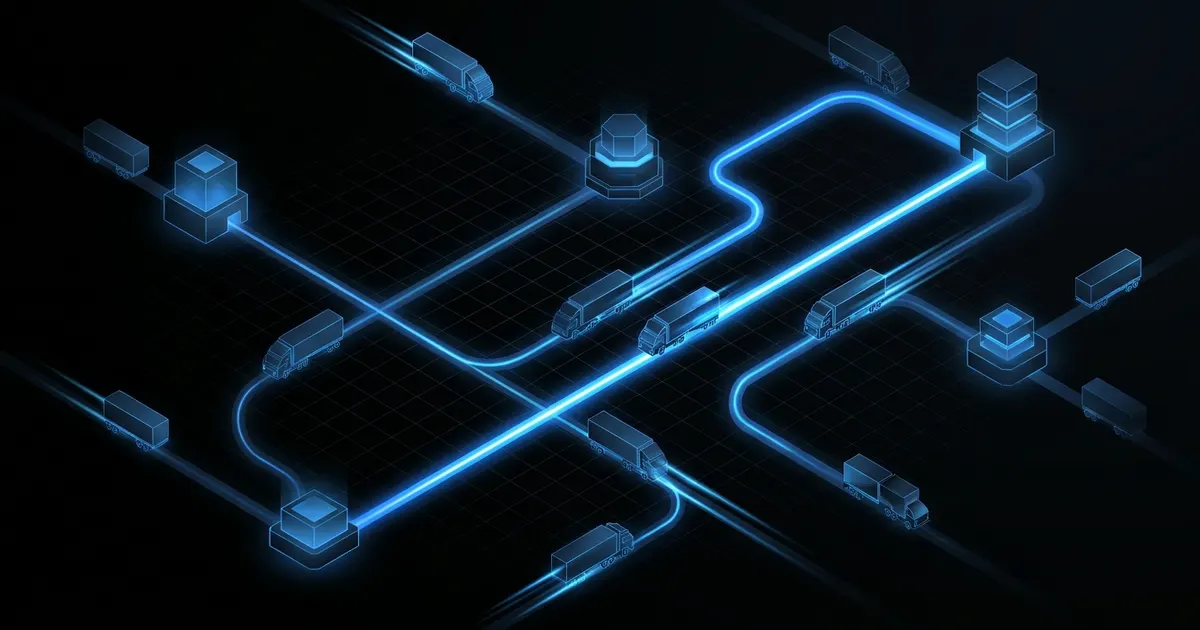
When a new load comes in, or when a truck is about to come free, the assistant generates options. For a truck delivering in Memphis tomorrow, it might show three available loads ranked by fit, each with the reasoning:
- The driver has enough hours to make the pickup window
- The equipment matches
- The delivery gets the driver closer to home ahead of their Friday commitment
- The empty miles to pickup are lower than the alternatives
For a new load, it works the other direction and suggests which trucks and drivers could cover it, and what that does to the rest of the schedule.
Every suggestion shows its reasoning. Dispatchers don’t have to trust a black box.
Handling the constraints that actually matter
The value of a dispatch assistant is in the details it respects. The build captures your real rules:
- Equipment type and trailer requirements
- Customer appointment windows and dock hours
- Driver preferences, restrictions and home time
- Customer-specific requirements, like driver assist or particular certifications
- Your own priorities, such as protecting key accounts or favoring higher-margin lanes
Some of these are hard rules that can never be broken. Others are preferences that can bend. The assistant treats them differently, the way an experienced dispatcher would.
Learning from your dispatchers
Dispatchers accept, adjust or reject each suggestion. When they reject one, they can give a quick reason, or the system infers it from what they did instead. Over time, the suggestions get closer to how your team actually plans.
Where dispatchers stay in control
The assistant suggests. Dispatchers decide. Nothing is tendered, assigned or communicated to a driver without a person accepting it.
You also control:
- Which constraints are hard rules and which are preferences
- How much weight to put on empty miles, margin, on-time performance or driver satisfaction
- Which dispatchers see which parts of the fleet
Every suggestion and every decision is logged. When you look back at a week, you can see which options were offered and what was chosen.
What it takes to build this properly
A demo dispatch tool can draw a route on a map and match a truck to a load by distance. That covers the easy part of the decision.
The production version needs more.
Accurate hours of service. HOS rules have real complexity: the 11-hour driving limit, the 14-hour window, the 30-minute break, the 70-hour cycle, split sleeper berth. Suggestions have to respect them exactly, using live ELD data, or they’re worse than useless.
Clean, current data. If truck locations or load statuses in the TMS are stale, suggestions will be wrong. Part of the build is checking data quality and making the assistant aware of when its inputs are old.
Capturing tacit rules. The most important rules aren’t in any system. Getting them right means sitting with your dispatchers, writing them down and testing suggestions against their actual decisions on past days.
Speed. A dispatcher won’t wait 30 seconds for a suggestion. The assistant has to return ranked options fast enough to fit into the flow of the job.
Integration both ways. Accepted suggestions should flow back into your TMS without retyping, so the system of record stays accurate.
What you need to provide
- Access to your TMS and your ELD or telematics platform
- Historical dispatch data so we can test suggestions against real decisions
- An hour or two with an experienced dispatcher to capture the rules they actually use
- A dispatcher willing to try early versions and say what’s wrong with them
How the build works
You describe the problem. We scope it together: which fleet, which systems, which constraints and what a useful suggestion looks like for your team.
You get a fixed price based on that outcome. You pay for a working dispatch assistant, not hours.
AI agents do the build, supervised by senior engineers who own the constraint logic, review the code and test suggestions against your historical dispatch decisions. That’s how the work moves fast and still holds up on a busy Monday.
You get a production-grade tool, deployed and connected to your TMS and ELD, in days to weeks. The code is yours.
Frequently asked questions
Is this the same as route optimization software?
Not quite. Route optimization usually solves a fixed problem, like the best stop order for a delivery route. This assistant works on the live decisions dispatchers make all day: which load, which driver, which truck, given everything else on the schedule.
Does it work for brokerage as well as asset-based fleets?
The approach adapts. For brokers, the assistant focuses on matching loads to carriers in your network based on lanes, history and performance. We scope that during the first conversation.
What happens when the data is wrong?
The assistant flags inputs that look stale or inconsistent, like a truck location that hasn't updated in hours. Dispatchers see the warning before they act on the suggestion.
Will dispatchers actually use it?
They will if it saves them time and its suggestions make sense. That's why reasoning is shown on every option and why we test against real decisions before launch.