Key Takeaway
The 2025 federal budget doubled the SR&ED expenditure limit to $6M, raised the refundable rate to 35%, opened enhanced credits to public companies, and restored capital expenditure eligibility. If you haven't filed amended returns for the last five years, you're probably leaving money on the table.
The 2025 federal budget brought the biggest changes to the SR&ED program in over a decade.
If you’ve been thinking about claiming SR&ED, or if you’ve claimed before, these changes matter. They expand eligibility, increase refund rates, and introduce a faster approval process.
The Three Major Changes
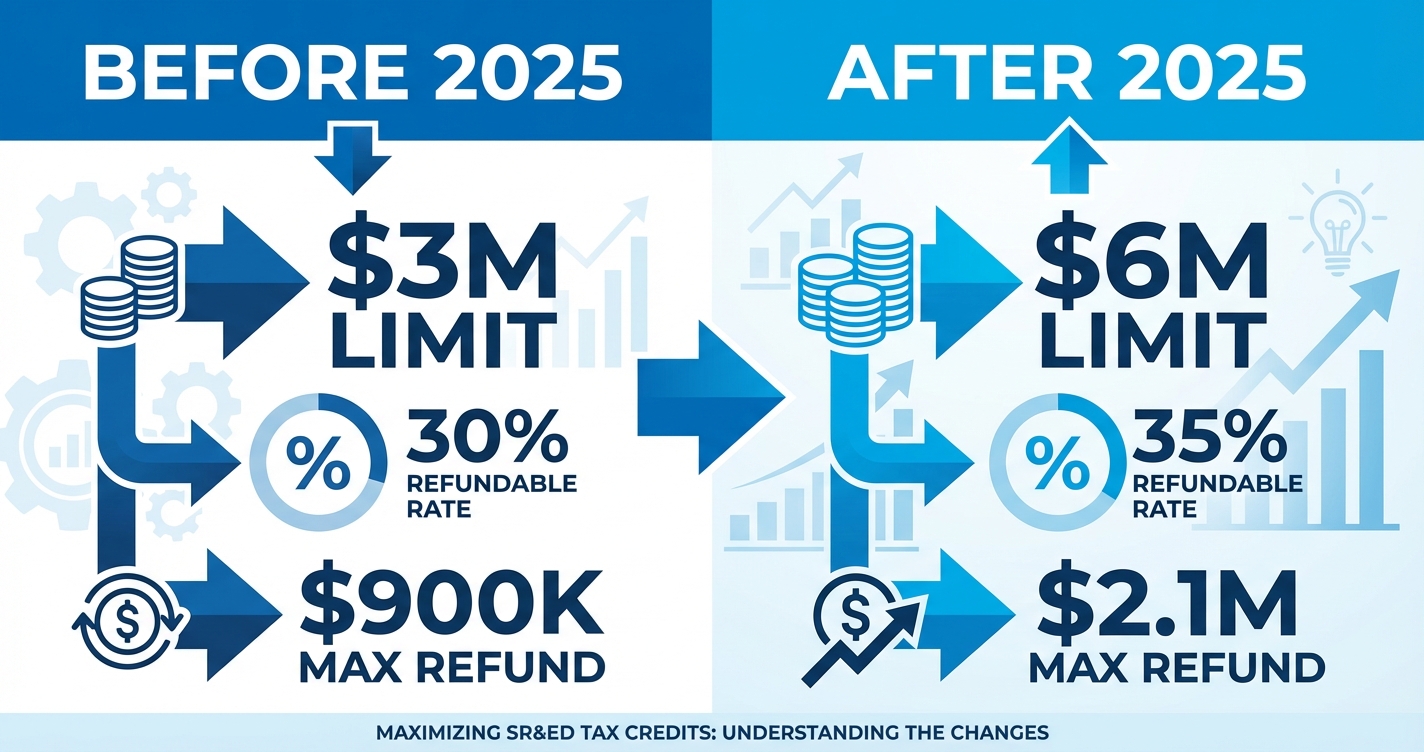
1. The Expenditure Limit Doubled
Before 2025: $3 million per year → 30% refundable = $900K max
After 2025: $6 million per year → 35% refundable = $2.1M max
For a Series B company spending $4M-$6M on engineering, you can now claim expenditures that were previously capped.

2. Public Companies Can Now Claim
Before 2025: Only CCPCs could claim at 30-35%. Public companies got 15%.
After 2025: Public companies now access up to 35%.
Example: A public tech company claiming $5M now gets $1.75M instead of $750K. That’s an extra $1M per year.
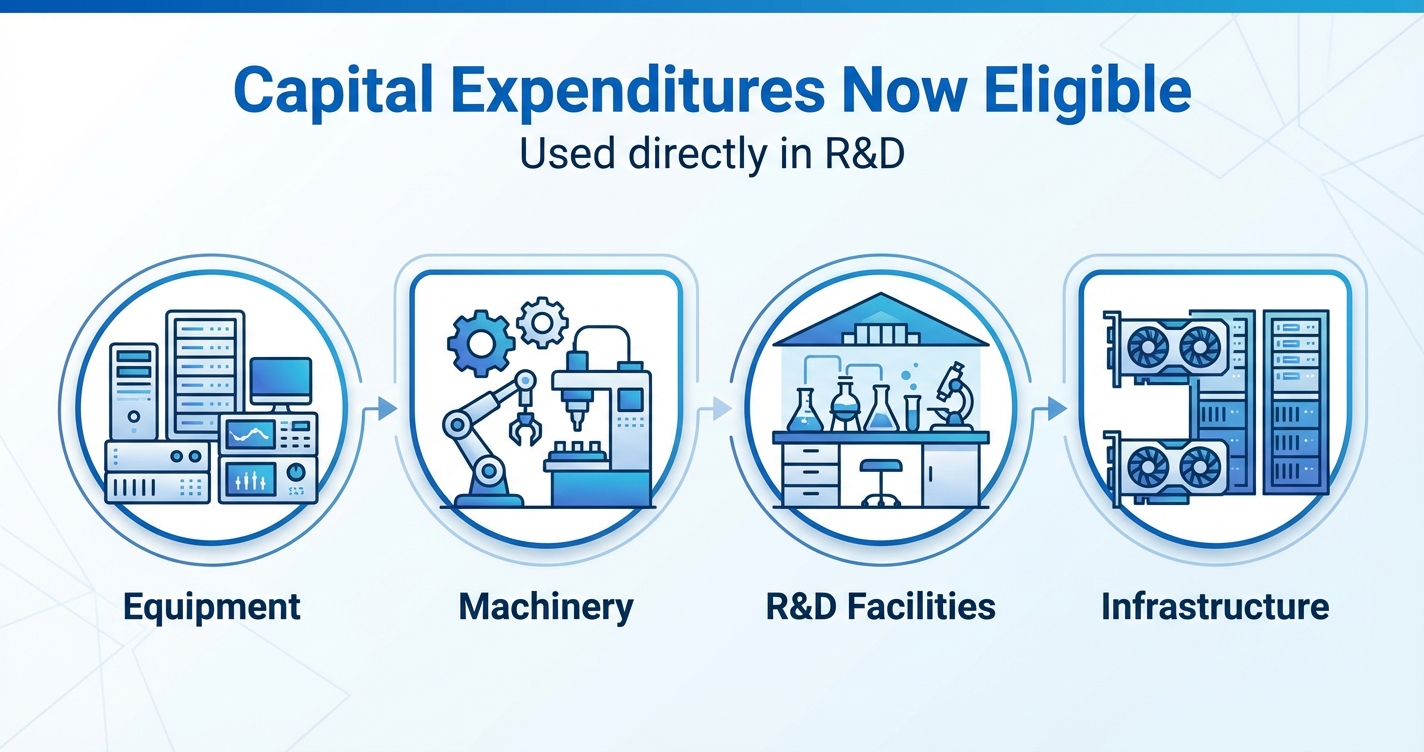
3. Capital Expenditures Are Back
Before 2025: Equipment and facilities didn’t count.
After 2025: Equipment, machinery, and facilities used directly in R&D are eligible.
Impact: Hardware companies, infrastructure-heavy R&D, and AI/ML teams benefit significantly.
Who Benefits Most
- Growth-stage SaaS: Can now claim higher engineering spend
- Public tech companies: Access to better refund rates
- Hardware/infrastructure-heavy companies: Capital expenditure eligibility
- AI/ML companies: GPU purchases and infrastructure now qualify
The Pre-Claim Approval Process
Coming April 1, 2026: Optional process where you submit a pre-claim first. If the CRA pre-approves your approach, full claim is processed in 90 days instead of 180.
What To Do Now
If you’ve never claimed: Get a rough estimate. Consider filing amended returns for past 5 years.
If you’ve claimed before: Talk to your accountant about amending prior returns, especially if you’re public.
If you’re planning to claim: Document carefully, especially capital expenditures.
The Bigger Picture
These changes signal that the CRA is committed to SR&ED. The program is more generous, faster, and more accessible. Document well, claim honestly, and you’ll be fine.
Frequently Asked Questions
How much more can I claim under the 2025 SR&ED changes?
The expenditure limit doubled from $3M to $6M per year, and the refundable rate increased to 35%. A company spending $6M on eligible R&D can now receive up to $2.1M back, compared to the previous maximum of $900K.
Can public companies now access the enhanced SR&ED rate?
Yes. Before 2025, only Canadian-Controlled Private Corporations (CCPCs) could claim at the 30-35% rate. Public companies were stuck at 15%. The new rules give public companies access to rates up to 35%.
What is the SR&ED pre-claim approval process?
Starting April 1, 2026, the CRA offers an optional pre-claim process. You submit your approach before filing the full claim. If the CRA pre-approves it, your full claim gets processed in 90 days instead of the typical 180.