Andrej Karpathy called it “vibe coding” back in early 2025, and the name stuck. Tools like Replit and Lovable let you describe what you want in plain English and get working software back. Jason Lemkin called Replit “the most addictive app I’ve used since I was a kid.”
He’s not wrong. Clicking deploy on something you built in an afternoon hits different.
But there’s a gap between “I built a thing” and “I have a product.” We talk to founders all the time who validated an idea on Lovable, got real users excited, and now face a choice: stay on the platform or build something they control.
There’s no universal answer. Here’s how we think about it.
What these platforms actually do well
Let’s start with credit where it’s due.
Asif Bhatti at Replit talks about giving founders “more shots on goal”. Instead of three attempts at product-market fit, you get thirty-three. That’s not marketing fluff. When testing an idea costs hours instead of months, you can afford to be wrong a lot more.
Marc Lou built TrustMRR in a single day. It made more money than his last three projects combined, each of which took months. Stories like this aren’t rare anymore.
These tools are genuinely good for:
- Proving an idea works before you invest real money
- Internal tools where nobody cares about scale
- Demos for customers who want to see something real
- Figuring out what to build when you’re still guessing
Lovable generates UI alongside code, so your prototype actually looks like a product. Replit goes deeper on the coding side with autonomous agents that can plan and build end-to-end.
Pick based on what you need. Both get working software in front of users fast.
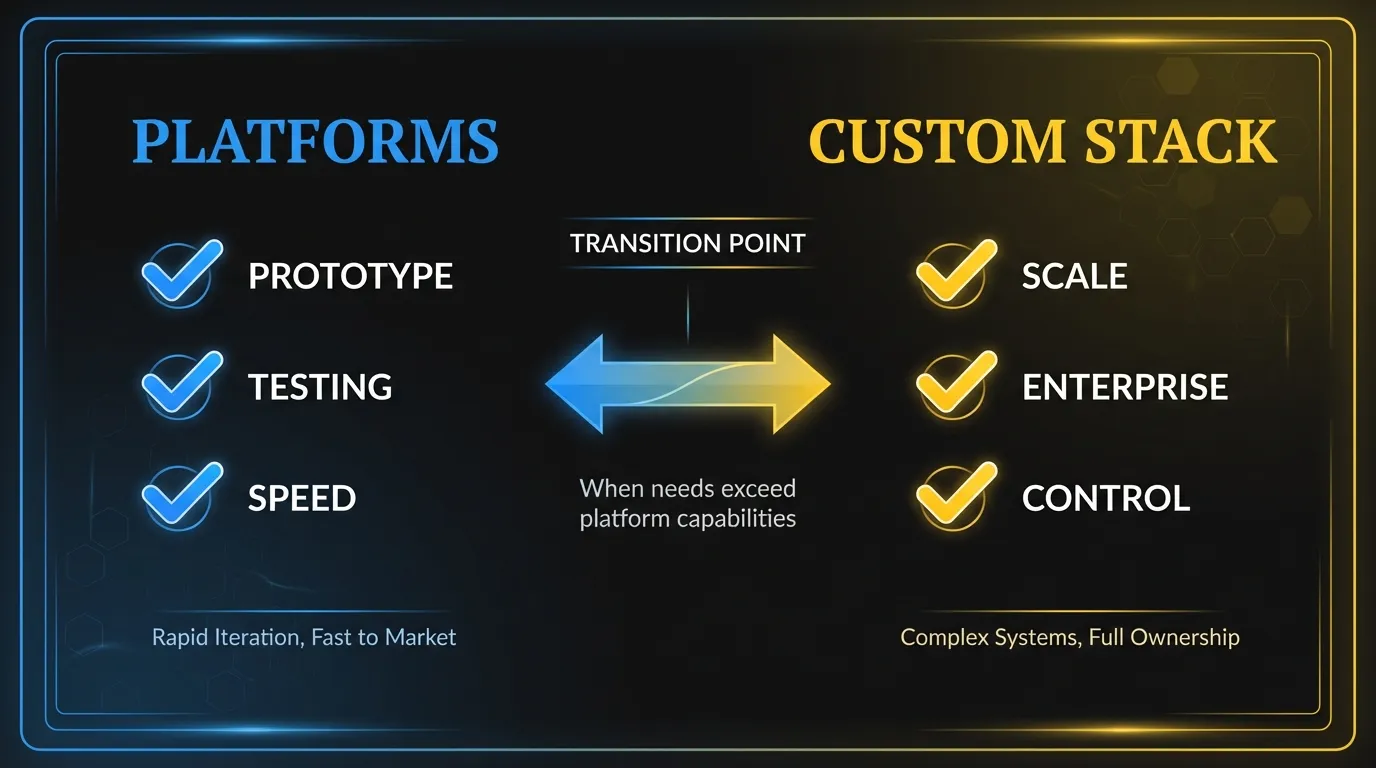
When staying on platforms stops making sense
The prototype worked. Users like it. Now what?
ISACA put it plainly: these tools are great for testing ideas, but “scaling into multi-user systems with structured data, permissions, and reliable automation usually requires other tools.”
The signs you’re hitting that wall aren’t about user counts. They’re about what your business needs.
Your customers want you in their ecosystem. They have identity providers, data systems, compliance requirements. Your app needs to plug into their world, not live in its own bubble. Platforms isolate you by design. That’s fine for a prototype. Less fine when a customer expects your product to behave like part of their infrastructure.
You need a team behind this thing. One person can own a prototype. A product needs people who can maintain it, extend it, fix it at 2 AM, and hand it off when they leave. That means code review, testing, incident response, documentation. Standard practices. Platforms weren’t built for that workflow.
Enterprise customers start asking questions. Where’s the data stored? How long do you keep it? Got SOC 2 docs? HIPAA? DX’s research is blunt: enterprise apps need end-to-end security controls. When you’re on someone else’s platform, you get their compliance posture. Maybe that works. Maybe it doesn’t.
You need to understand your costs. Prototypes burn money inefficiently. That’s fine. Production can’t. Custom stacks let you cache, route cheap queries to cheap models, and optimize token usage. Teams doing this well cut LLM costs 50-70%. When your bill crosses a few thousand a month, that matters.
Ejecting is easier than it sounds
Here’s the thing people get wrong: migrating off a platform isn’t a rewrite.
The valuable parts of your prototype—the prompts, the flows, the logic that made users care—those transfer. You’re swapping out the infrastructure underneath, not rebuilding the product.
A custom stack for most AI products is pretty simple:
- FastAPI or something similar for your API
- Postgres for data
- Redis for caching
- Direct calls to your LLM provider, maybe through Vercel AI SDK
- Whatever observability tools your team already uses
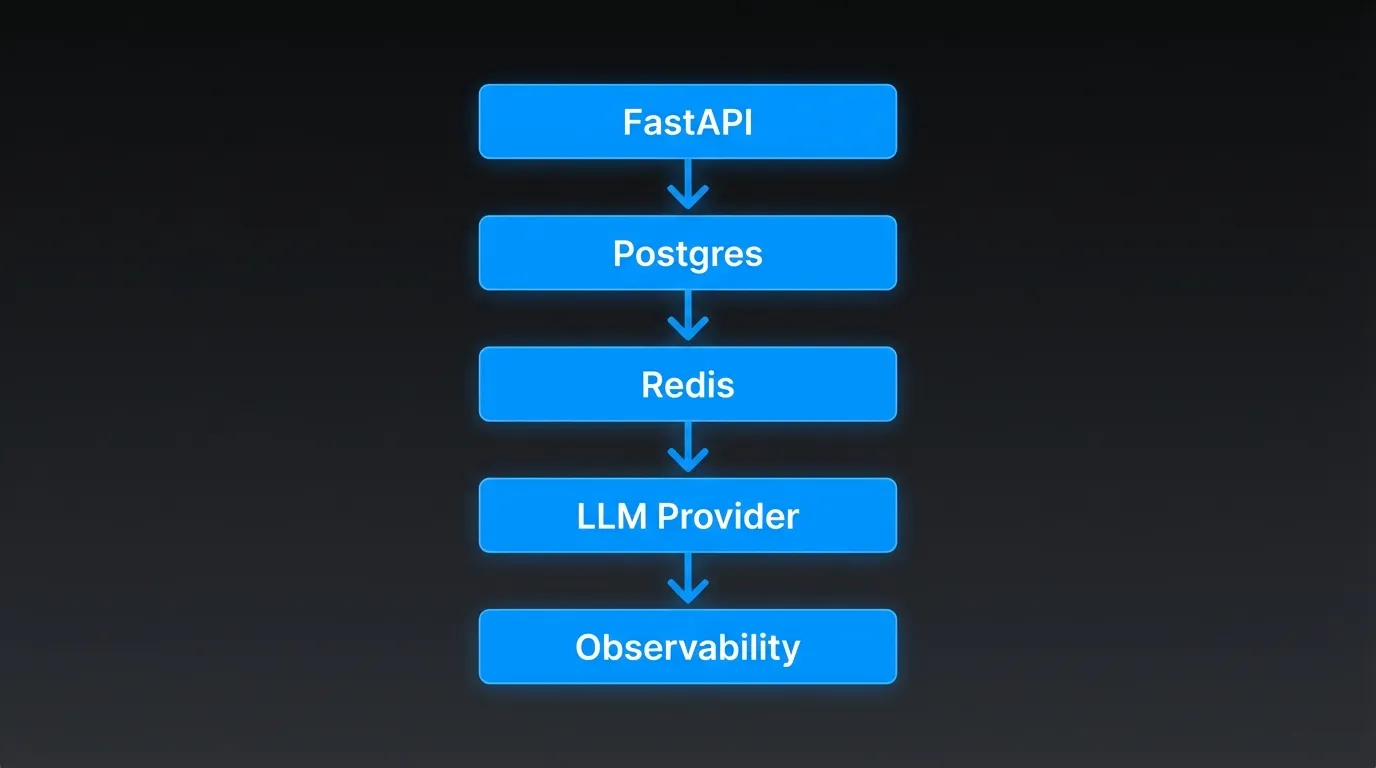
One senior engineer can run this. Migration takes 4-8 weeks, not quarters.
The trick is planning for it from the start. Keep your prompts in version control. Document how your agents work. Don’t let your IP get tangled up in platform-specific code. Then when you’re ready to leave, you actually can.
Who’s going to support this thing?
This is the real question. Not “which technology” but “who’s responsible when it breaks?”
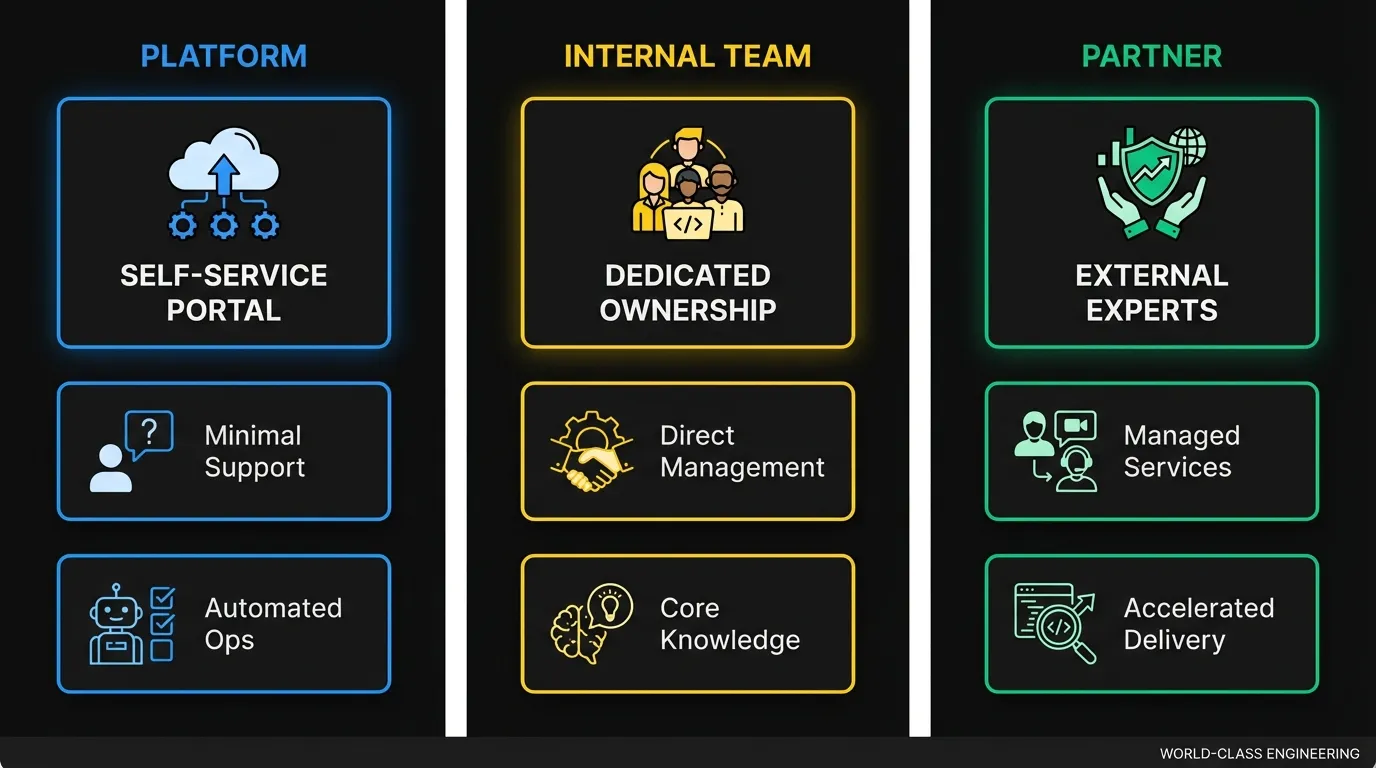
Staying on the platform makes sense if your team is small, the platform does what you need, and you’re not selling to enterprises with security requirements. You trade control for simplicity. That’s a legitimate choice.
Building an internal team makes sense if you have engineering capacity and want to own the stack. Your people get something to maintain and improve. They use standard tools. They build knowledge that stays in the company.
Working with a partner makes sense if you want production infrastructure without hiring a full team. You get expertise, support, and flexibility. They handle the migration, implement best practices, and transfer knowledge over time. When your needs change, you scale the engagement up or down.
Different situations, different answers.
Where teams screw this up
We’ve seen a lot of these transitions. The mistakes are predictable.
Moving too early. You’re still figuring out what to build and you’re optimizing infrastructure. Stop. Research shows that AI-generated code has subtle issues that compound. But that’s a problem for later. Right now, find product-market fit.
Moving too late. Workarounds pile up. Technical debt compounds. The codebase becomes a mess that’s expensive to untangle. When you see the signals—enterprise questions, integration needs, support requirements—start planning.
Throwing away what worked. The prototype succeeded because users liked specific things about it. Don’t lose those in a migration. Preserve what works. Improve how it’s built.
Underestimating the learning curve. DX found that AI-assisted development requires techniques most developers haven’t learned yet. Teams need support figuring out how to work with these codebases, whether they’re staying on platforms or migrating off.
So what do you actually do?
Start on platforms. Seriously. Take your shots on goal. Build prototypes in hours. Test ideas that would have been too expensive to try before. Don’t prematurely optimize.
But decide upfront what would trigger a change. First enterprise customer asking hard questions? Need for deep integration with customer systems? Point where you need real team support? Pick your signals so you’re not making the decision under pressure.
Choose your support model deliberately. Internal team, external partner, or staying on the platform—each makes sense in different situations. The technical part is straightforward. The organizational part is what matters.
And keep your options open. Prompts in version control. Workflows documented. Business logic separated from platform glue. So when you’re ready to move, you can.
These platforms are legitimately impressive. The opportunities they create are real. Knowing when to evolve past them is just part of building a product that lasts.
Building an AI product and thinking about what’s next? Whether you’re still validating or ready to migrate, we help teams figure out the right path. Get in touch.